(SR-71 conversion)


YF-12 model in 1/72 scale: kit review & modelling report
page 2
page 3
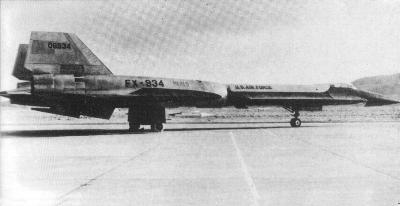

The YF-12 interceptor was developed from the A-12 at the Lockheed Skunk Works, work starting at the end of the nineteen-fifties. The Kelly Johnson Skunk Works design was chosen also because of the excellent U-2 track record.
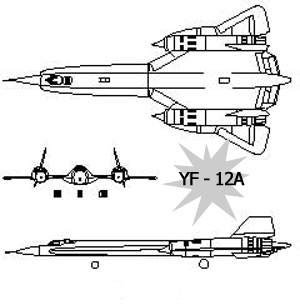
Using experience of the A-12, a requirement emerged for a high speed "fighter interceptor" to intercept Soviet bombers that were developed to attack the USA. The U.S. president and USAF acknowledged quite early in the program 29 February 1964 the existance of the YF-12. This was done to keep the "non existent" A-12 secret that was already flying.
The YF-12 would be armed with huge Hughes AIM-47A/ GAR-9 missiles with in internal fuselage bays; this variant was called the (Y)F-12, a crew of two and special tracking devices and radar in a converted nose. It did not have RAM materials to give a lower radar cross section as it had a fighter role. It got a slightly raised two man cockpit hatch section as compared to the single seat A-12. For added stability 2 smaller ventral fins below the nacelles and a large foldable ventral fin below the aft fuselage were required. First flight was August 7, 1963 at Groom Dry Lake. The YF-12 could successfully track its target and fire the missiles. Only 3 YF-12 interceptors were manufactured as it was too costly. A few aircraft continued research flights also to conceal any operational A-12 observations from the ground as it looked similar at high altitude. It retained a similar paint scheme as the A-12 to when seen people would say... that's the YF-12....
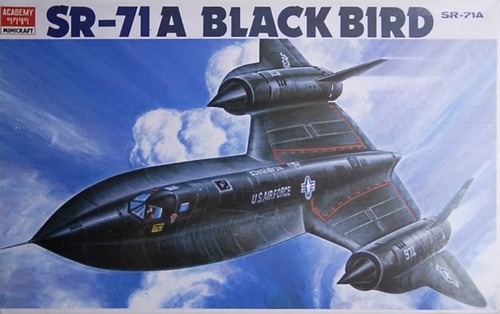
The 1/72 SR-71 kit converted is the Academy/ Minicraft #FA-032 kit. It looks to be a sort of copy of the Hasegawa SR-71 kit but now with recessed panel lines.
NOTE: later I could acquire a few books about the subject (see references) and found out many years later that the forward fuselage horizontal width of the Hasegawa / Academy kits is about 47mm; it should be about 51 1/2mm so the kit misses 4 1/2mm. (May be it was a bit less wide as no RAM material was used in these areas).
The forward fuselage cross section "height" is quite good and the cockpit hatches look accurate though may be a 2mm too short in lengths.
The dimensions of the YF-12 are:
length: 30,97 m = 430mm in 1/72 scale;
wing span: 16,94 m = 235mm in 1/72.
The model got these modifications for a YF-12:
- first the rear end of the fuselage was shortened and puttied (similar to the A-12). The length reduction here was about 16mm.
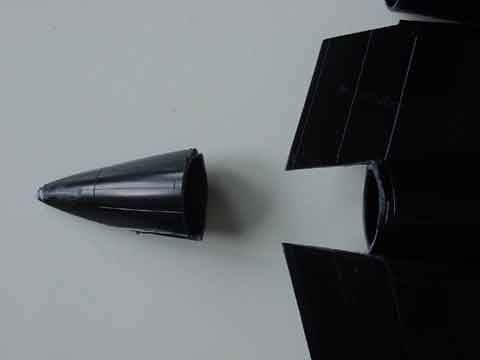
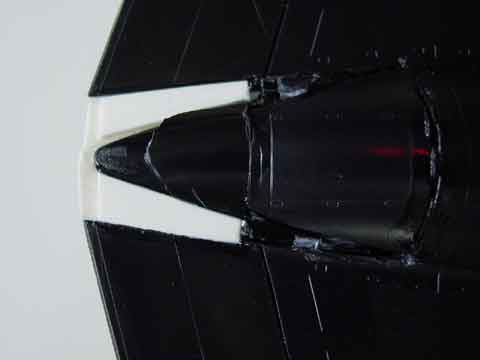
Putty and sand...
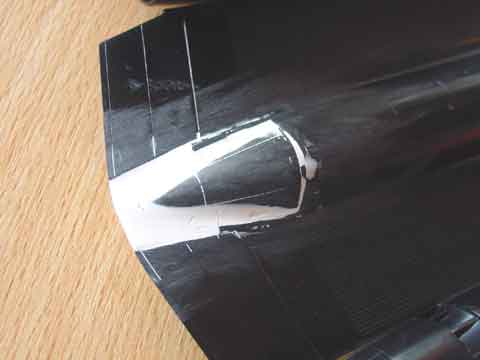
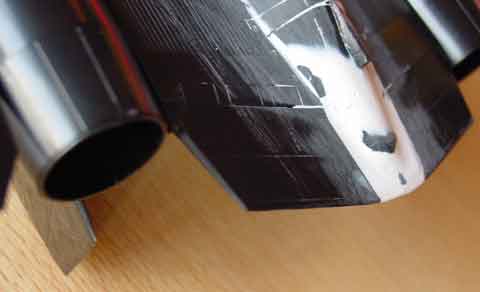
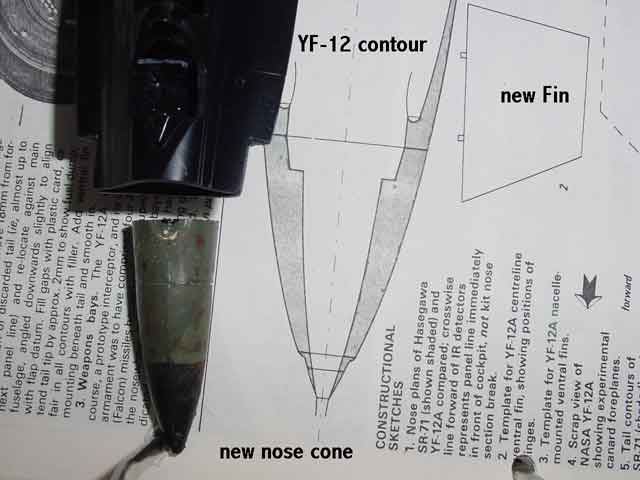
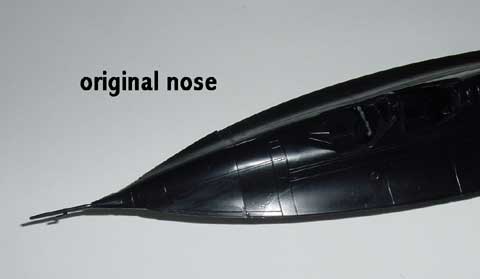
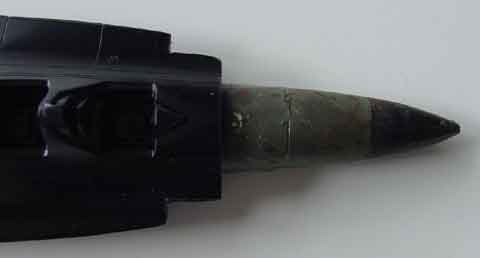
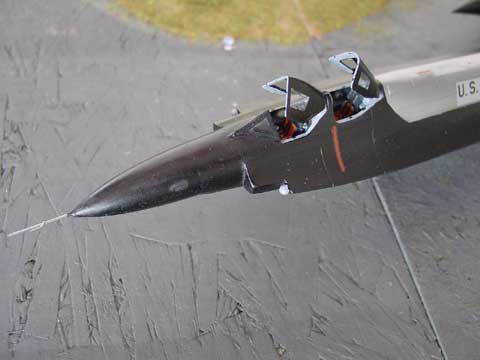
- the YF-12 had a radar nose for the ASG-18 Fire Control Radar so the SR-71 kit nose needs conversion. A new radar radome was to be added; length is about 20mm for which a F-4 Phantom nose section + F-4 radar nose was used from the spares box. All was blended in. So total new front length is about 40mm in 1/72.
Note also the notches cut out in the nose area besides the front cockpit which had infra red (IR) sensors.
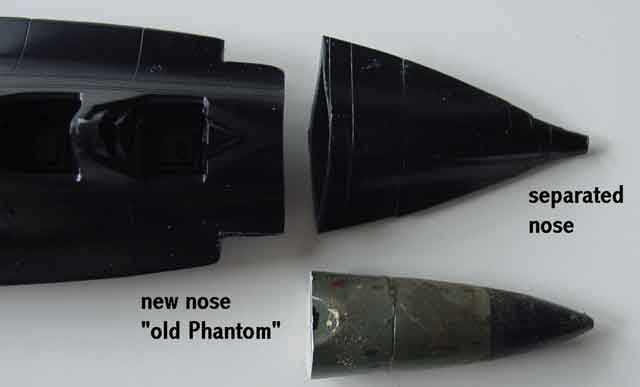
... use putty and sanding....
- two fins were added below the rear engine nacelles with card; the red plastic are the nacelle fins.
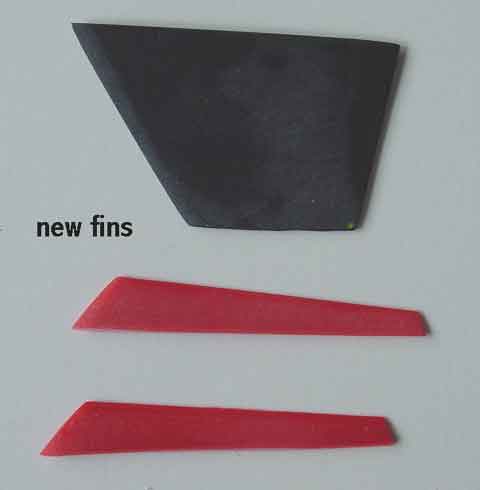
- a large (set in folded position) ventral fin was added amidst the lower rear fuselage made from card;
The model was further assembled, sorry I forgot to make a photo.
After all surfaces looked smooth, a grey base primer was airbrushed.
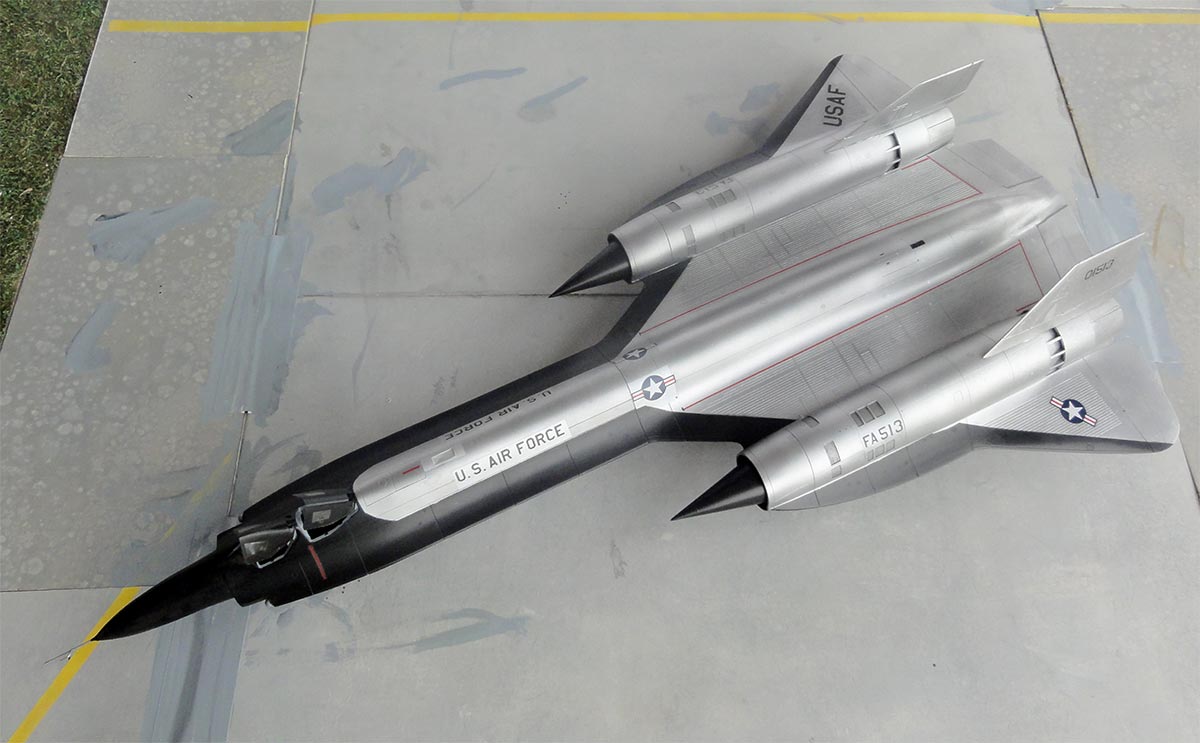
The scheme was picked for a USAF YF-12 flown May 1965 to set the "absolute speed and altitude record for its class". (the secret A-12 flew faster.... but did "not exist"). This YF-12 flew in a nice paint scheme of heath absorbing black and unpainted titanium. The black areas are mainly at edges of the fuselage and wings. The titanium panels on other upper sections of the plane. Also, at certain markings (serial, star-and-bars and U.S. AIR FORCE title) a slightly different panel colour can be seen on the real YF-12. The A-12 had a similar paint scheme.
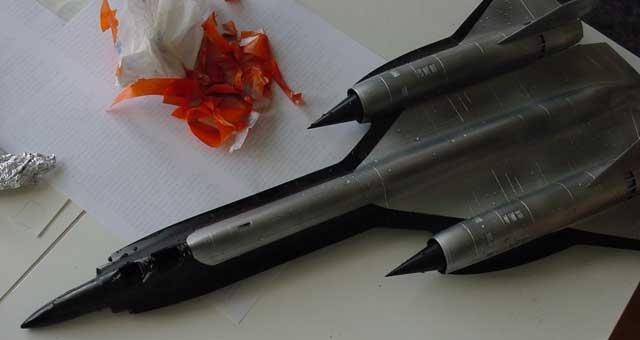
This was made from "silver" decal on the
model. First, the overall model got sprayed on gloss black coat. Then the
panels were masked off, and TESTOR enamel silver paint was airbrushed on with some
black paint mixed in for the darker titanium. Recessed grills were given
a treatment with very thinned coat of black paint.
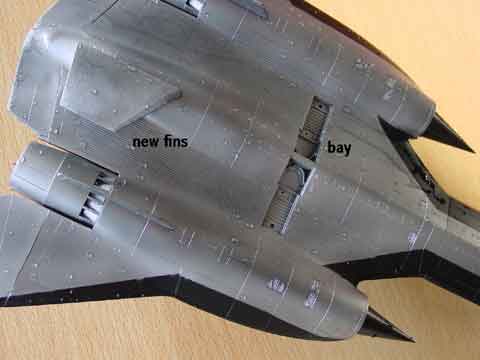
note: water
droplets are seen still on the picture,.model being cleaned after masking
In the main undercarriage bay, two
small half circles from card were added (the wheels should fit in).
A pitot tube was made from a needle, undercarriage legs and wheels were used as from kit, painted in a mix of black and silver (heat deflection). The small cockpit interior was left as is from kit, only adding seat belts and instruments from spare decals.
Unfortunately, my kit had no decals. However, the basic markings can be obtained from the usual spares box. Red walkway striping was used of an Aeromaster decals sheet. See also the note on the different panel tints at the titles and markings!
The nice cockpit hatches were set after painting and there the model is! Note filled/ closed refuelling panel.

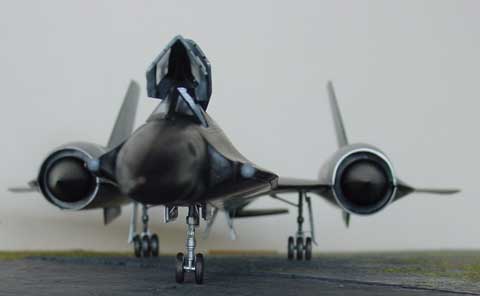
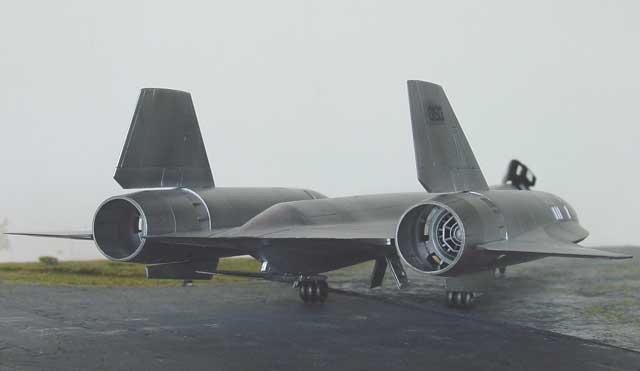
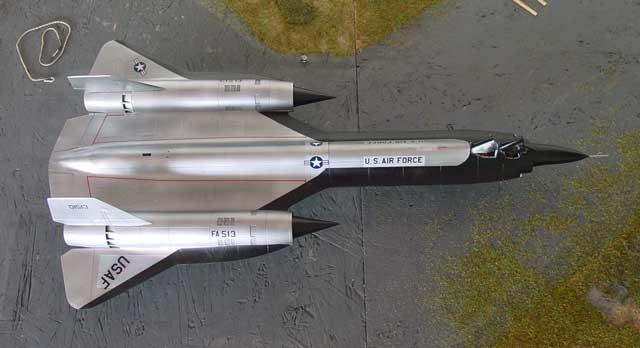
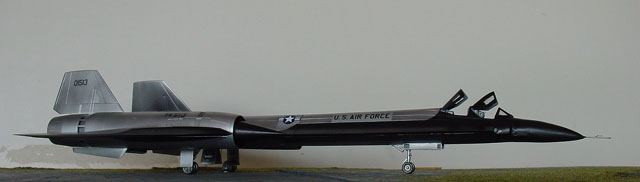
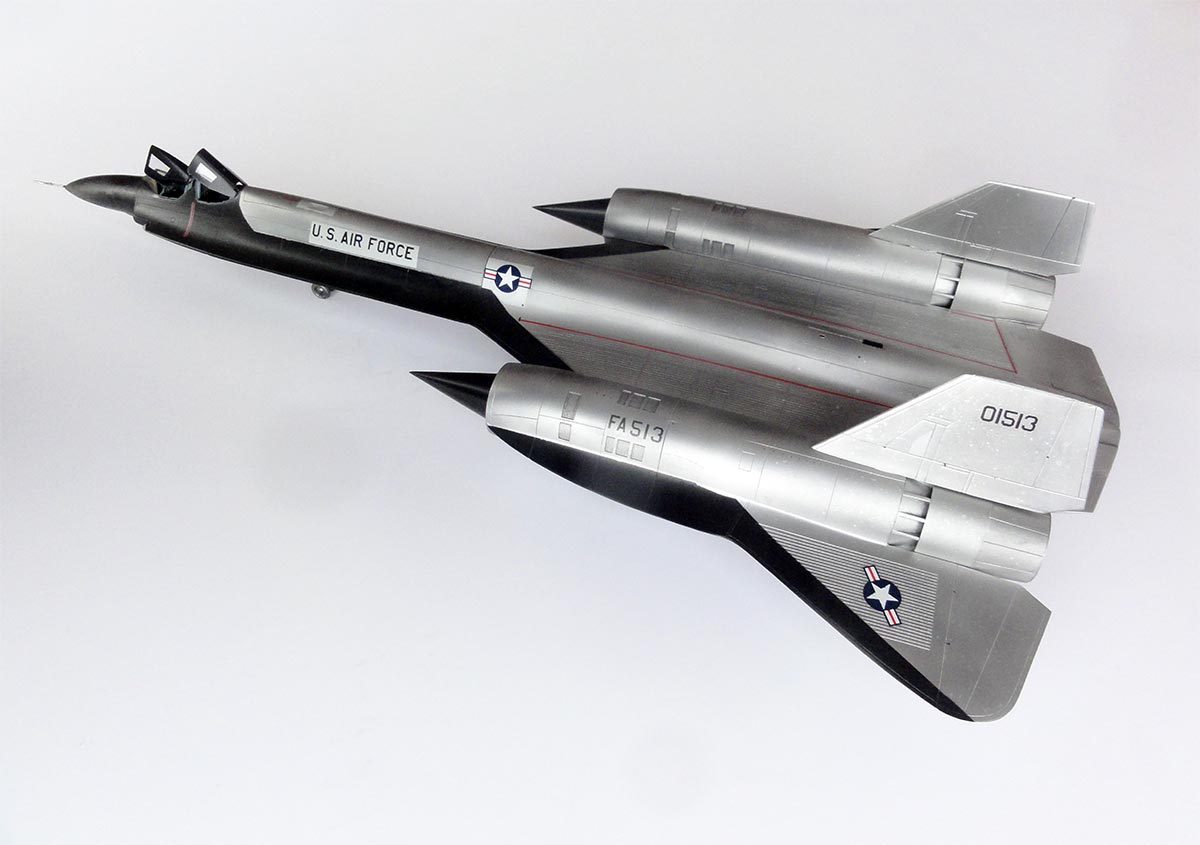
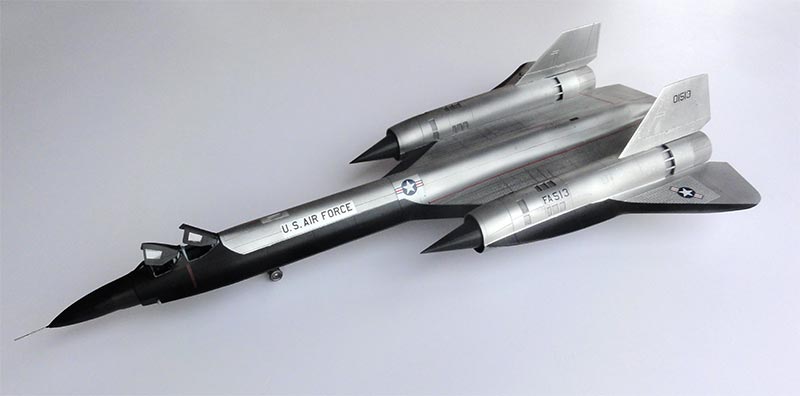
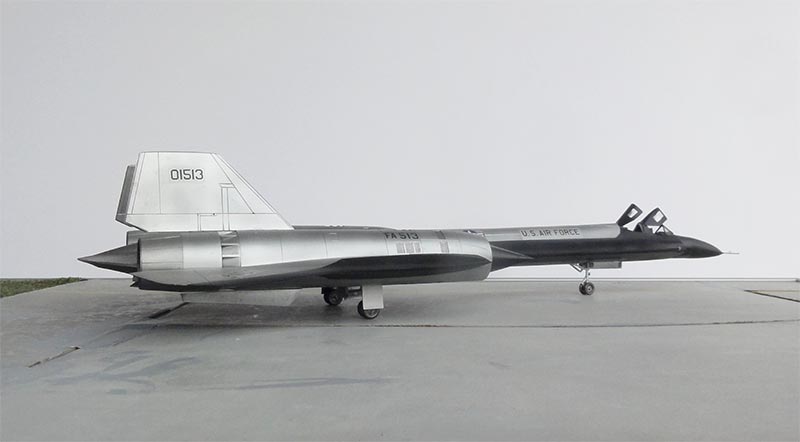
Lockheed YF-12 interceptor, 01513
On to the SR-71 page....
References:
- CIA U-2 and Oxcart Program report, declassified 2013/06/25
- SR-71 in Action, #55, Squadron Signal, 1982 edition (a bit outdated)
- SR-71 Blackbird family (A-12, SR-71, D-21), Jay Miller and James Goodall, Aerofax, 1985 edition (a bit outdated)
- The untouchables, Shul and Watson jr., Mach 1 inc., 1993
- SR-71 Blackbird, James Goodall, Squadron Signal, 1995 (includes not only SR-71 but also A-12, YF-12, D-21 history and photos).
- SR-71 Blackbird family, James Goodall and Jay Miller, Aerofax, 2022 (includes not only SR-71 but also A-12, YF-12, D-21 history and photos).
- Lockheed Skunk Works, first 50 years, Jay Miller, Aerofax, 1993 edition:
=============
Web:
https://roadrunnersinternationale.com (recommended!)
https://www.thesr71blackbird.com/
IPMS NL walk arounds (of myself and my modelling friend Cees Hendriks):
SR-71 walk around
A-12 walk around
D-21 walk around
Youtube with first A-12 flights: https://www.youtube.com/watch?v=rPwnTOMh-8I

(c) Copyright Meindert "designer"/ All rights reserved.Your comments are welcomed by webmaster
Created this page Sept 21, 2003